
Best Office Aircond System in Malaysia: VRV or Cassette Aircond? (2026 Guide)
Index
Introduction
If you are choosing between VRV and cassette aircond for an office in Malaysia in 2026, the first thing to know is this: they are not really the same type of thing.
That is exactly why so many business owners get confused.
A VRV system is a full air-conditioning system design.
A cassette aircond is an indoor unit style that blows air from the ceiling.
In real office projects, a cassette unit can even be part of a VRV system.
So the better question is not just “VRV or cassette?”
It is:
do you need a full multi-zone office system?
or do you need a simpler ceiling-mounted cooling solution for one area or a smaller office?
This guide breaks the difference down clearly so business owners, office managers, facility managers, and commercial property decision-makers in Malaysia can choose the right office cooling setup before installing or upgrading in 2026.
Why This Comparison Confuses So Many Office Buyers
This comparison is confusing because people often use the words like they are direct alternatives.
But they are not.
A cassette unit is usually about how the cool air is delivered into the room.
A VRV system is about how the whole building or office cooling network is designed and controlled.
That means one is closer to a system architecture, while the other is closer to an indoor delivery format.
Once that is clear, the buying decision gets much easier.
VRV vs Cassette Aircond: The Quick Answer
Simple answer:
VRV is usually better for larger offices with multiple rooms or zones that need separate temperature control and better energy management
cassette aircond is usually better for smaller or medium open-plan offices that want neat ceiling cooling without the cost and complexity of a full VRV setup
So the real decision usually comes down to:
office size
number of rooms or zones
whether different teams need different temperature control
ceiling design and renovation scope
long-term operating budget

What Is a VRV Aircond System?
A VRV system is a variable refrigerant volume system designed to connect one or more outdoor units to multiple indoor units with zone-based control.
In practical office use, this means:
multiple rooms can be cooled from one central system concept
different indoor zones can be controlled separately
the system can be designed more flexibly for larger commercial layouts
VRV is Daikin’s trademark name for this kind of variable refrigerant flow system.
In office projects, VRV is often considered when the space has:
many rooms
meeting areas
management rooms
open-plan areas mixed with enclosed zones
long daily operating hours

What Is a Cassette Aircond System?
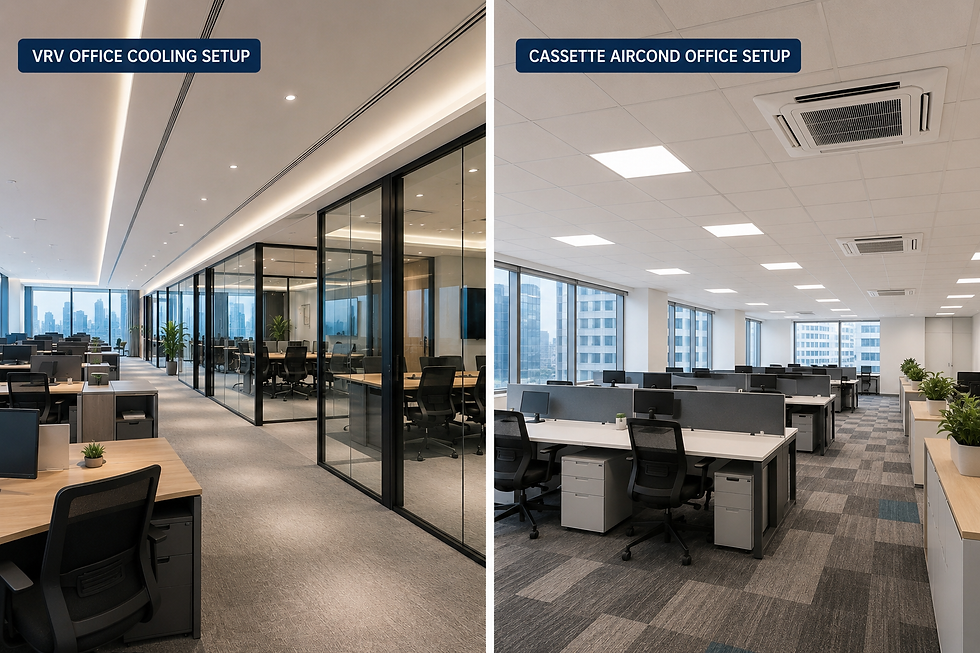
A cassette aircond is a ceiling-mounted indoor air-conditioning unit that distributes air from the ceiling, often in 4 directions depending on the model.
For office buyers, the biggest appeal is simple:
it looks cleaner than wall-mounted units
it distributes air more evenly across open areas
it suits suspended ceiling layouts well
Cassette systems are commonly used in:
offices
meeting rooms
retail spaces
restaurants
clinics
commercial shoplots
A cassette unit can be installed in a simpler split-type setup, packaged system, or as part of a larger VRV/VRF system depending on project design.
VRV vs Cassette Aircond: What’s the Real Difference?
Simple answer: VRV is a full multi-zone commercial system, while cassette is a ceiling indoor unit type that may be used alone or inside a bigger system.
System Type vs Indoor Unit Type
This is the biggest difference.
VRV:
complete aircond system design
built for multiple indoor units and zones
often used for larger commercial projects
Cassette:
indoor unit format
usually chosen for ceiling-based air distribution
can be part of a simple or complex system
So asking “VRV or cassette” is a bit like asking “full network system or one style of indoor unit?”
That is why the better buying discussion is about what kind of office you actually have.

Zoning and Temperature Control
This is where VRV often wins.
VRV is stronger when:
different rooms need separate control
directors’ rooms, meeting rooms, and work areas have different usage patterns
the office runs long hours and energy control matters more
Cassette is often enough when:
the office is mostly one open-plan area
the cooling need is simpler
one or a few ceiling units can handle the space without a larger zoned network
Cassette systems depend heavily on ceiling design.
They usually work best when the office has:
suspended ceiling space
proper drainage and piping route
enough room above ceiling for the cassette body and service access
VRV systems can also use cassette indoor units, but the overall project usually involves:
more planning
more piping design
more controls setup
bigger installation scope
That means a VRV project is often more suitable during a full office fit-out, major renovation, or whole-floor upgrade.
Cost and Long-Term Office Practicality
In many office projects:
cassette systems usually cost less upfront for smaller or simpler areas
VRV systems usually cost more upfront but may make more sense long-term for larger offices with many zones
This is especially true when the office has multiple operating areas and cooling needs that do not all run the same way throughout the day.
So the better question is not just “Which one is cheaper now?”
It is:
Which one fits the office better over the next few years?

Which Setup Works Best for Malaysian Offices in 2026?
For most buyers, the right answer depends on office layout and usage.
Choose VRV if:
the office is larger
there are many separate rooms or departments
temperature zoning matters
long-term energy management is a serious concern
you are doing a full commercial system upgrade
Choose cassette aircond if:
the office is small to medium in size
the layout is open-plan or relatively simple
you want a neat ceiling look
you want better air distribution than wall-mounted units
you do not need a complex multi-zone system
For many Malaysian offices in 2026, cassette aircond is often the more practical choice for smaller open-plan offices, while VRV is often the smarter long-term choice for larger multi-room office spaces.

Best Use Cases for VRV and Cassette Aircond in Offices
VRV is often suitable for:
larger offices
multi-room corporate floors
office buildings
offices with meeting rooms, manager rooms, and departments
commercial spaces where zoning matters a lot
Cassette aircond is often suitable for:
open-plan offices
medium-sized offices
meeting rooms
shop offices
clinics and light commercial spaces
office areas with suspended ceilings and simpler cooling design
What Should You Check Before Hiring an Aircond Contractor?
Before hiring an aircond contractor, compare more than just equipment brand or initial price.
Check these first:
total office size
number of rooms or cooling zones
whether the ceiling can support cassette installation
whether future office expansion is likely
energy-use expectations
service and maintenance access
whether the contractor explains why the proposed system actually suits your layout
The best contractor should help you choose based on how the office operates, not just on what unit is easiest to sell.
Did You Know?
VRV and VRF refer to the same basic type of variable refrigerant technology, but VRV is Daikin’s trademark term.
Cassette units can be used inside a VRV system, which is why these two options are not always direct competitors.
Ceiling cassette units are often chosen because they distribute air more evenly and keep the wall space cleaner in offices and commercial spaces.
FAQ
1. Is VRV better than cassette aircond for offices?
Not always. VRV is usually better for larger offices with multiple zones, while cassette is often better for smaller or simpler open-plan office layouts.
2. Can cassette aircond be part of a VRV system?
Yes. A cassette unit can be used as one of the indoor units within a VRV system.
3. Which is cheaper to install, VRV or cassette aircond?
For smaller offices, cassette systems are usually cheaper upfront. VRV usually involves a larger system scope and higher initial cost.
4. Which office setup needs better zoning control?
Offices with many rooms, departments, or uneven usage patterns usually benefit more from VRV-style zoning.
5. Is cassette aircond good for open-plan offices?
Yes. Cassette aircond is often a strong choice for open-plan offices because it gives a cleaner ceiling look and more even air distribution.
Conclusion
VRV vs cassette aircond is not really a simple one-versus-one product comparison.
It is a decision about system complexity versus space simplicity.
If your office has many rooms, different cooling zones, and bigger long-term energy planning needs, VRV is often the better commercial solution.
If your office is smaller, more open, and needs neat ceiling cooling without a full VRV setup, cassette aircond is often the more practical answer.
The best office aircond system in Malaysia in 2026 is the one that matches the office layout, usage pattern, and long-term operating plan — not just the one that sounds more premium.
Get Your Office Aircond Quote 📲
Need help deciding whether your office needs a VRV system or cassette aircond setup?
Our team can help with:
office layout and cooling assessment 📐
practical system recommendations based on room zoning and usage 🏢
installation planning for commercial spaces ✨
cleaner, more reliable office aircond solutions for Malaysian businesses 🔧
If you are comparing VRV and cassette air-conditioning systems before installing or upgrading an office cooling system in Malaysia, message us with your office layout or floor plan for a faster quotation.

Komen